


Agent-Based Modeling:
Worlds Within Worlds
The Santa Fe Institute and the Rise of Agent-Based Modeling for Social Science
In the 21st century, surging computational power and dataset availability have made a method known as agent-based modeling increasingly useful to decision-makers. To imagine where the method might go next, it serves us to look at history. Focusing on SFI contributions, this story chronicles the rise of agent-based modeling in the social sciences, beginning with its roots in the Manhattan Project and John Conway’s Game of Life, continuing on to canonical proof-of-concept models like the Santa Fe Artificial Stock Market and Sugarscape, and finally turning to more recent applications in public health, archaeology, and macroeconomics, ending with a view to the future.
 i
Sun streams through stained glass, splashing bright colors on the faces of an uncommon assembly: economists, physicists, and computer scientists.
On any given day, you might catch them scribbling equations on a blackboard where an altar used to be. Gathered in a former convent adapted to house the fledgling Santa Fe Institute, these researchers ponder the role of biological evolution in economic theory. They debate the merits of classic mathematics versus the games running on their boxy desktop computers down the hall.
 i
And they discuss a promising new approach to building scientific models, one that could put the economy under glass.
Were it to truly work, the machinations of economic systems would become much clearer.
 i
Though these researchers didn’t fully realize it as they gathered in the former convent in the late 1980s, this new approach was coalescing into a coherent method.
Soon, that method would evolve into a radically different way to study the science of human society.
An environment of intellectual flexibility helped incubate the approach, bolstered by a yearning to tackle complexity. The method — soon to be known as “agent-based modeling” — developed and attracted interest, initially within the field of economics.
Over several decades, researchers at SFI and elsewhere made improvements to the method, providing a new window into some of the key complex phenomena arising in economics, and eventually in many other fields. Ballooning computational power and dataset availability helped drive the evolution of agent-based modeling and increase its real-world impact. Yet the method still lingered on the fringes of economic scholarship.
Now, well into the 21st century, agent-based modeling has reached a critical juncture. With the advent of big data, the method is poised to offer powerful insights for predicting financial crises, managing pandemics, even uncovering truths about the past.
To grasp how this deceptively simple idea has become a potent tool for understanding complexity and hard social problems, we must return to its origins.
A new kind of looking-glass emerges, through which we see worlds parallel to our own taking shape.
THE FIRST LENS
Emerging from checkerboards and bombs
Precursors to agent-based modeling first gain popularity in the late 1960s and early 1970s.
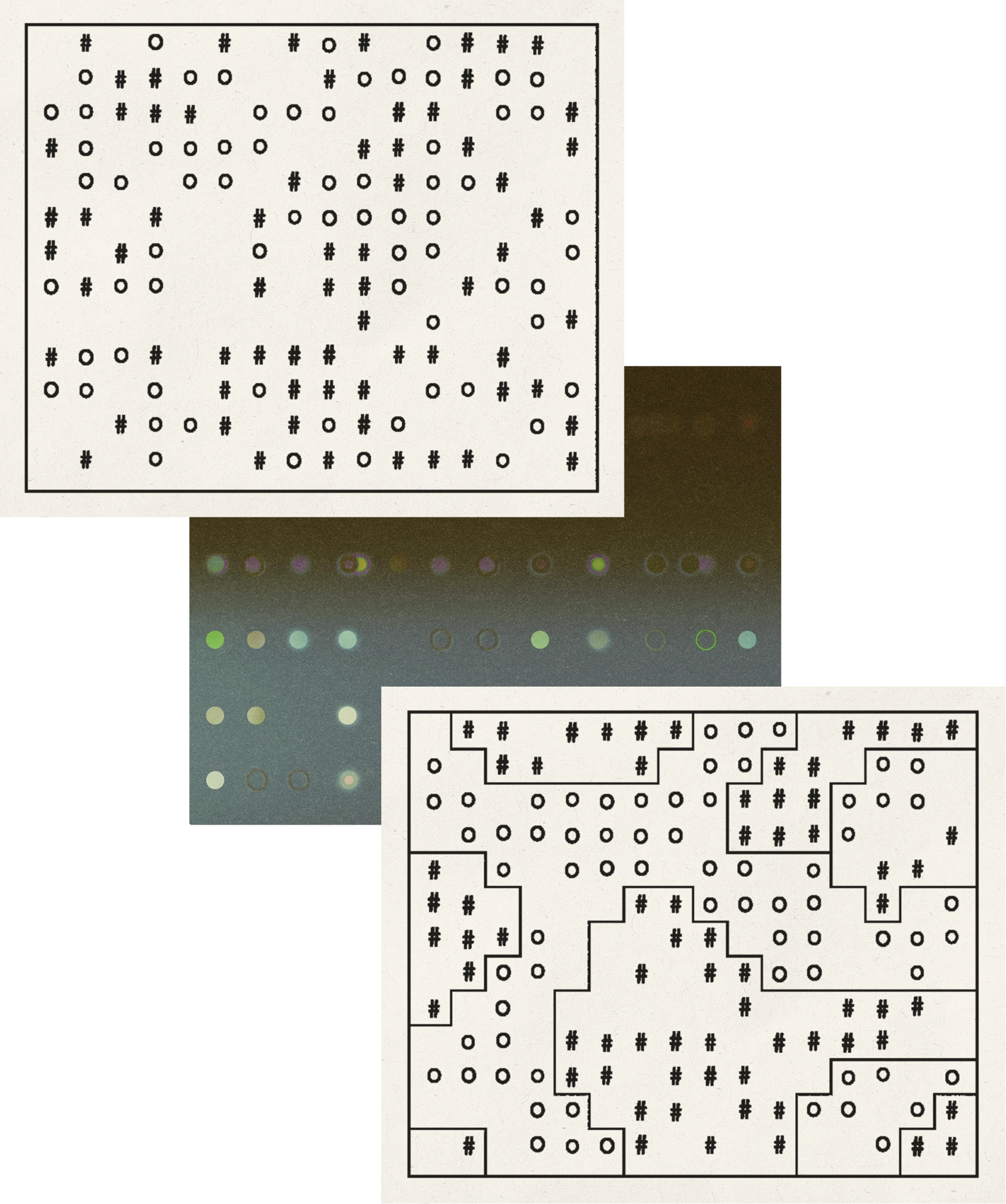
It may look like conceptual checkerboard art has taken over the pages of a 1970 Scientific American magazine.1 Actually, the black-and-white squares stand for living and dead organisms. Mathematician and habitual game-maker John Conway has gleefully developed a series of rules about how these 2D creatures are born, survive, and die.2 Whether a cell makes it depends on the exact number of adjacent living and dead cells.
Scientific American summarizes what makes Conway’s “Game of Life”3 so striking: “Because of its analogies with the rise, fall and alternations of a society of living organisms, it belongs to a growing class of what are called ‘simulation games’ — games that resemble real-life processes.”
 i
The following year, social scientists start playing a different kind of checkers.
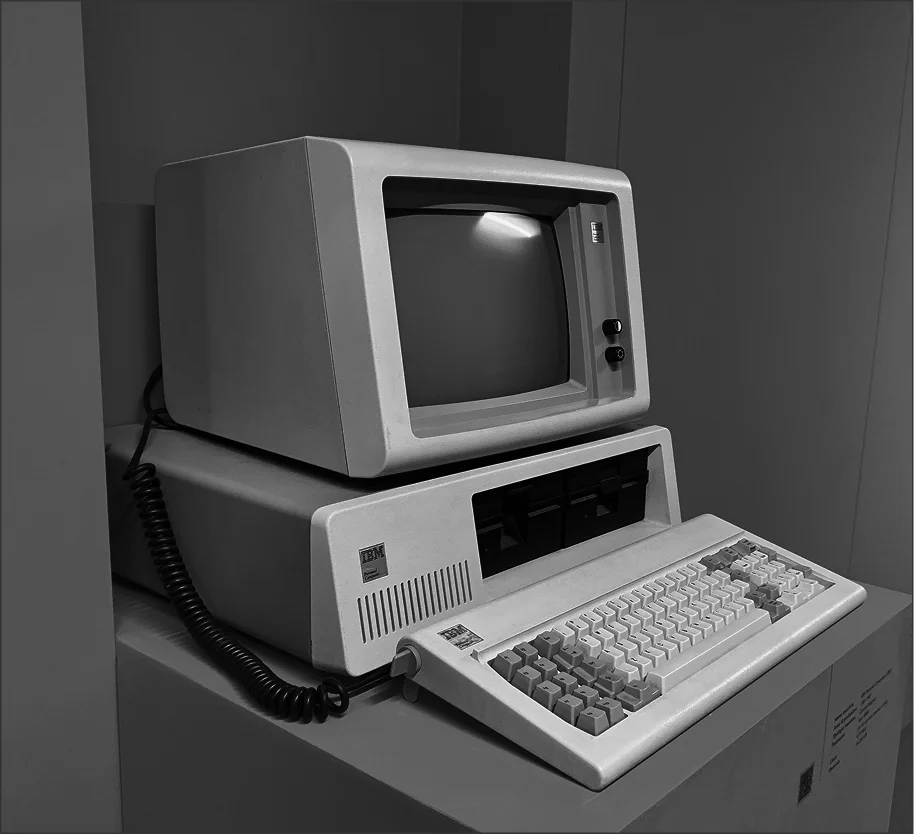
Thomas Schelling, a RAND economist and Doctor Strangelove consultant, has proposed another game of adjacent squares that resembles real life even more soberingly.4 He is not the first to develop a checkerboard model of social interaction — that was social scientist James Sakoda, based in part on his experience of incarceration in a Japanese internment camp — but Schelling’s version gets the credit.5
The “Schelling segregation game” asks: could racially segregated neighborhoods form based only on a slight preference to live near people like you? The answer is yes, even in the absence of racist policies (such as redlining) that mandate segregation.
At the time, Schelling sees minimal research value in computers, which are room-sized beasts that pump out reams of paper outputs, with no display to watch dynamic changes.6 Yet the ideas that he, Sakoda, and others develop soon intertwine with the coming computational revolution, birthing a profound new way to model social systems.



 i
Then, in the 1980s, researchers around the globe encounter something new: the desktop computer.
Many skeptical social scientists balk that computers aren’t any good for modeling.8
But others find that computers offer an unprecedented opportunity to model the true complexity of human social life.
The growing availability of desktop computers enables curious social scientists to return to older problems where mathematical solutions had fallen short. This new computational approach builds on the mid-century work of pioneering researchers from the Manhattan Project.
 i
Computational and mathematical innovator Stanisław Ulam developed the concept of “cellular automata,” where an agent’s fate depends on its neighbors — presaging the checkerboards of Conway and Schelling. Ulam’s personal book collection formed the early core of the Santa Fe Institute library.
 i
Child-prodigy mathematician John von Neumann theorized about self-replicating machines and helped define game theory, including systems of agents who acted rationally to maximize value (a crucial idea for economics).
 i
Physicist Nicholas Metropolis became an evangelist for computation, built pioneering electronic computers and algorithms critical for modern computing, and was a Santa Fe Institute founder.
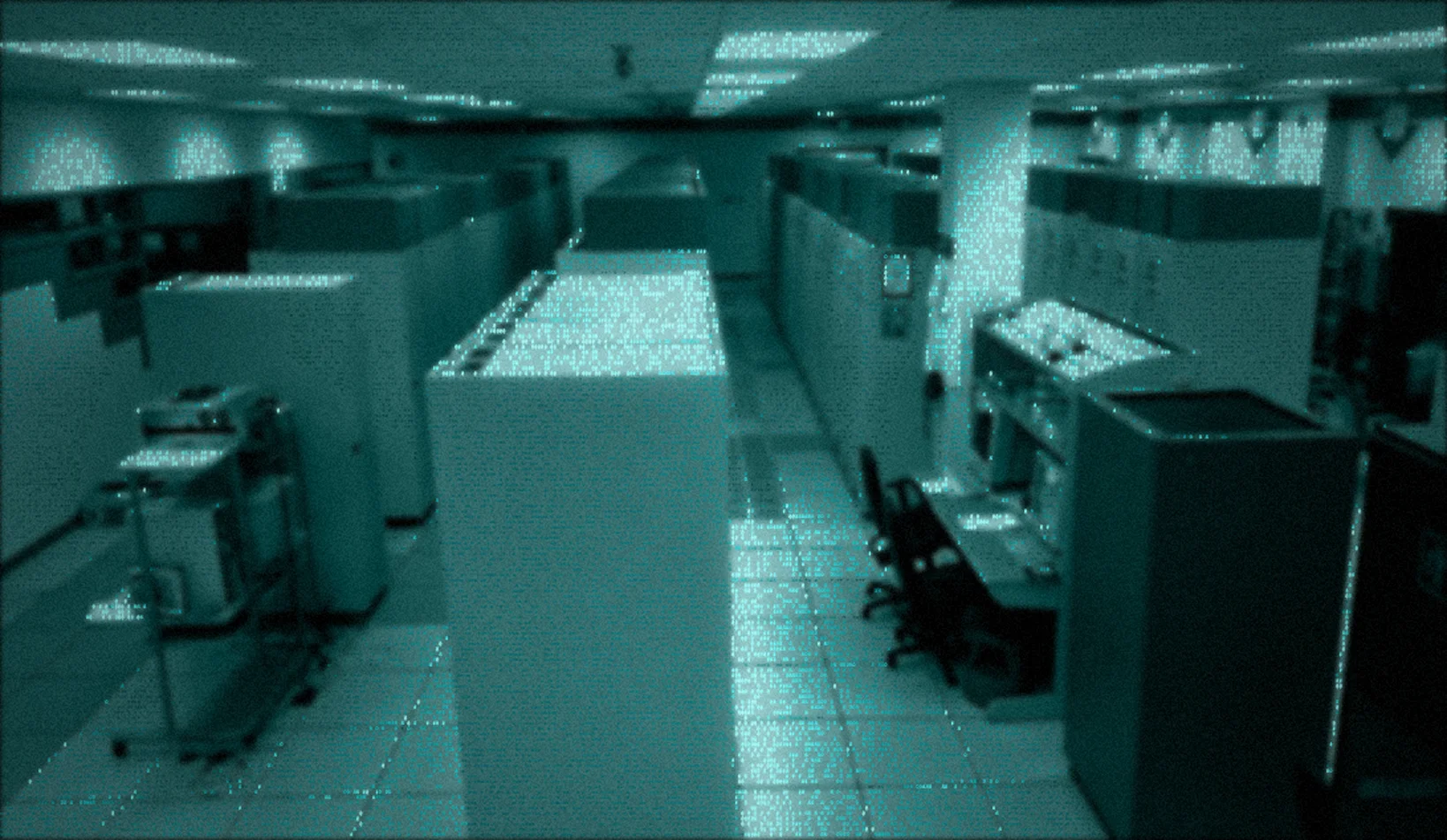
Stanisław Ulam, John von Neumann, and Nicholas Metropolis had built adaptive mathematical methods for the Manhattan Project that could help split atoms and understand chain reactions. To escape the innate bounds of mathematics, they began to imagine computation as a modeling tool, laying the groundwork not only for agent-based modeling, but for fields like artificial intelligence. In a defining example, they developed various Monte Carlo methods that used the computer to explore systems governed by random events.9
 i
 i
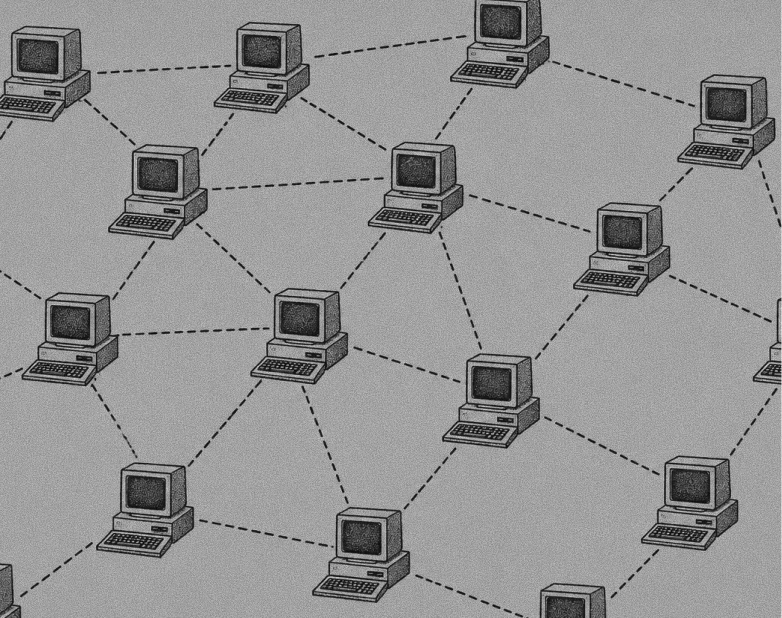
In computer science, the nascent field of “distributed AI”10 aims to build networks of intelligent agents that can solve problems a single computer cannot.
 i
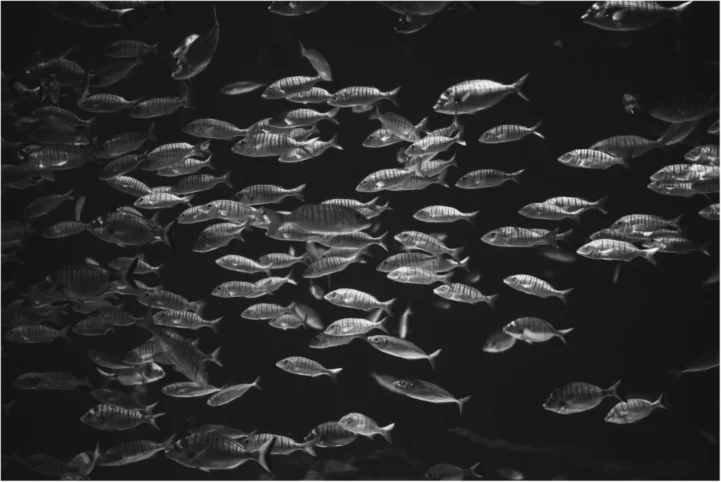
In biology, researchers build “individual-based models” to represent schools of fish or animals in herds.
 i
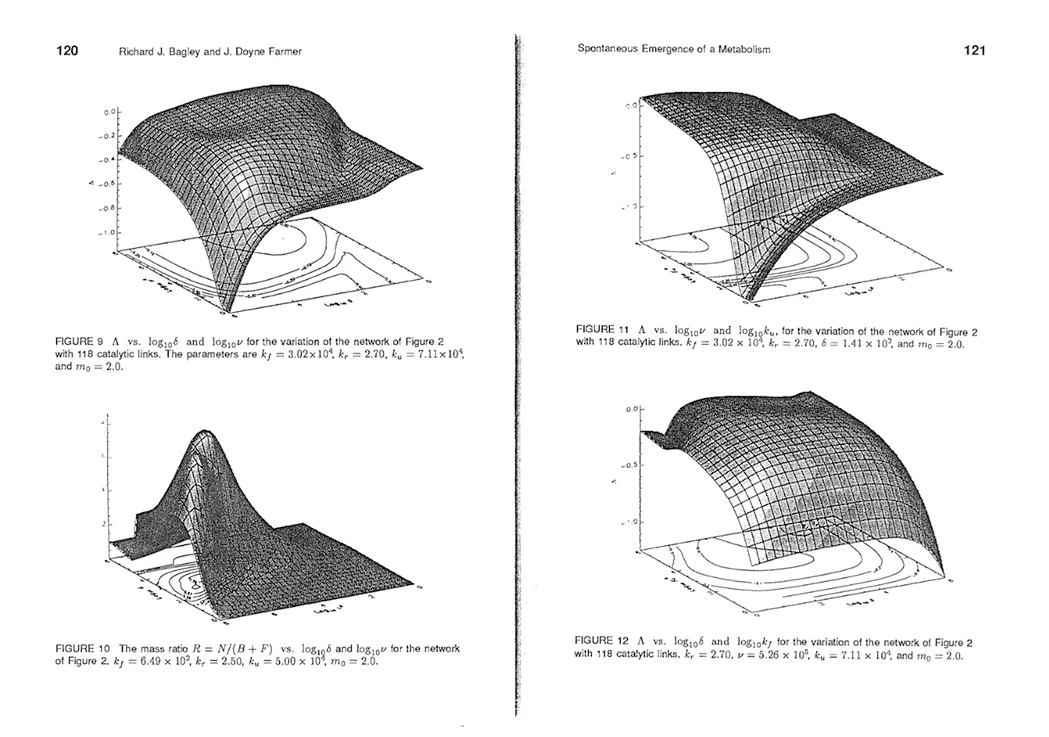
At Los Alamos National Laboratory, descendant of the Manhattan Project, researchers from many fields attempt to synthesize “Artificial Life” (often called “ALife”) that can self-reproduce and evolve.
Throughout the social sciences, particularly in economics, the influences of individual-based models, distributed AI, and ALife converge into an approach that becomes known as “agent-based modeling.”
Robert Axtell:SFI External Faculty Fellow
“At the beginning, we weren’t sure what to call our work.
I remember Chris Langton, who was big in ALife, said something like, ‘the acronym for individual-based modeling is IBM, same as the corporation. There’s no way I’m calling my life’s work that.’
Bob Axelrod at the University of Michigan thought we should call it ‘actor-based modeling.’
We had a natural affinity to that, because what you’re doing is building little creatures that take to the stage and act — but there was already a different concept in sociology called the ‘actor model.’
The computer scientists were calling their work ‘multi-agent systems,’ but there, every computer in a network was an agent, which wasn’t quite right for us.
In the end, there wasn’t any group decision. ‘Agent-based modeling’ just became the term everybody used.”
PATTERNS UNDER STAINED GLASS
How does agent-based modeling emerge from these origins and become a tool with promise for explaining and predicting the world’s complex phenomena?
To answer that question, we need to address another: what, exactly, is an agent-based model?
At its most basic, a “model” represents some system in our universe. A classic example is the Malthusian growth model, which represents how population growth will quickly outstrip the ability to grow food. Or consider the now-widely-known large language models, which represent patterns in human language.
Many models take a top-down approach: using mathematical equations to recreate the patterns we see in nature or society. Most differences between individuals collapse into high-level abstractions.
But an agent-based model (often shortened to ABM11) starts from the ground up. An ABM represents individual actors in, say, an economy or pandemic, and the rules that those “agents” follow.12 Let the agents loose, study their interactions, and what emerges? Sometimes perfect equilibrium, sometimes a perfect mess, and often something interesting between those two extremes — not unlike our own world. Traditional models often struggle to capture this interesting in-between.
ABMs work particularly well at modeling the complexity that arises from the fluctuating and often idiosyncratic interactions between agents. Meanwhile, something like a traditional economics model assumes away such complexity to make the math clean.
Thus, agent-based modeling often succeeds where other models fail: at capturing unexpected emergent behaviors in the real complex systems that exist in our world.
 i
To better understand how an ABM works, consider the classic puzzle known as the Prisoner’s Dilemma.13
Two apprehended thieves must decide whether to rat out the other or stay quiet. This scenario, invented in 1950 by two researchers at the RAND Corporation, inspired political science professor Robert Axelrod as he watched Cold War gamesmanship unfold around him. He decided to study the dilemma by making the two “thieves” have repeated encounters, wondering if there was a way of determining definitively whether (and when) to cooperate.
Axelrod organized computerized tournaments, where experts around the world mailed in strategies for their prisoner “agent” to follow.14 Then he ran experiments, testing the agents’ strategies against each other on a computer. Finally, he scored the results. The unexpected winner: cooperate first, then follow a tit-for-tat strategy.
Now in 1984, Axelrod publishes an influential book on his Prisoner’s Dilemma Tournament ABM.15 (Later, researchers such as Stephanie Forrest and Reiko Tanese work with him to incorporate learning into the model.16) What strikes a number of social scientists about Axelrod’s model is that it has managed to represent nuanced social interactions, like cooperation and betrayal, through simple computation.17 The modeled interactions between agents grow complex enough to generate surprising, and often unexpected, outcomes.


This new computational heft enables scientists to program ever-more-sophisticated ABMs to model various features of biology and society.
Then came the “boids” — an elegant proof of concept that ABMs could mimic the real behavior of living things.
Meanwhile, far north on the frigid edge of the Atlantic, marine biologist Jacqueline McGlade is thinking about haddock, and how ABMs can model economic booms and busts.
For ten days, economists, physicists, and mathematicians, including some Nobel Prize winners, compare approaches between their fields.
They discuss agents and evolution, consider differences across nonlinear models and geographic regions. Over kitchen-table beers, their discussions go long into the night.
The meeting becomes known as “The Economy as an Evolving Complex System” — launching an ongoing series of books by the same name — and hashes out an approach called “complexity economics” that provides agent-based modeling with an early intellectual incubator.21
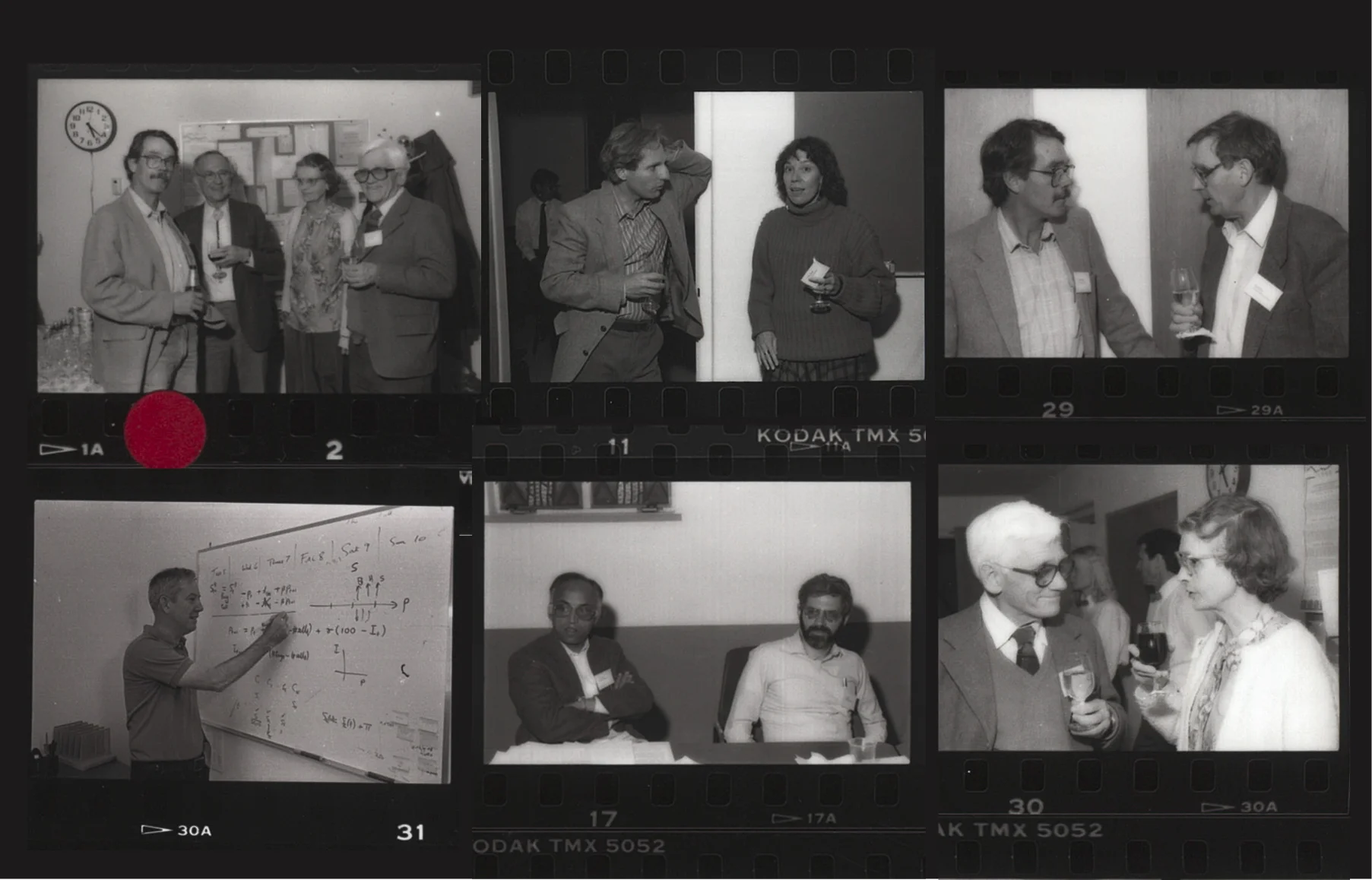
The Santa Fe Institute, born a few years earlier, has organized this landmark economics meeting. Soon after, SFI secures funding to launch its first residential program, focused on complexity economics.
 i
 i
 i
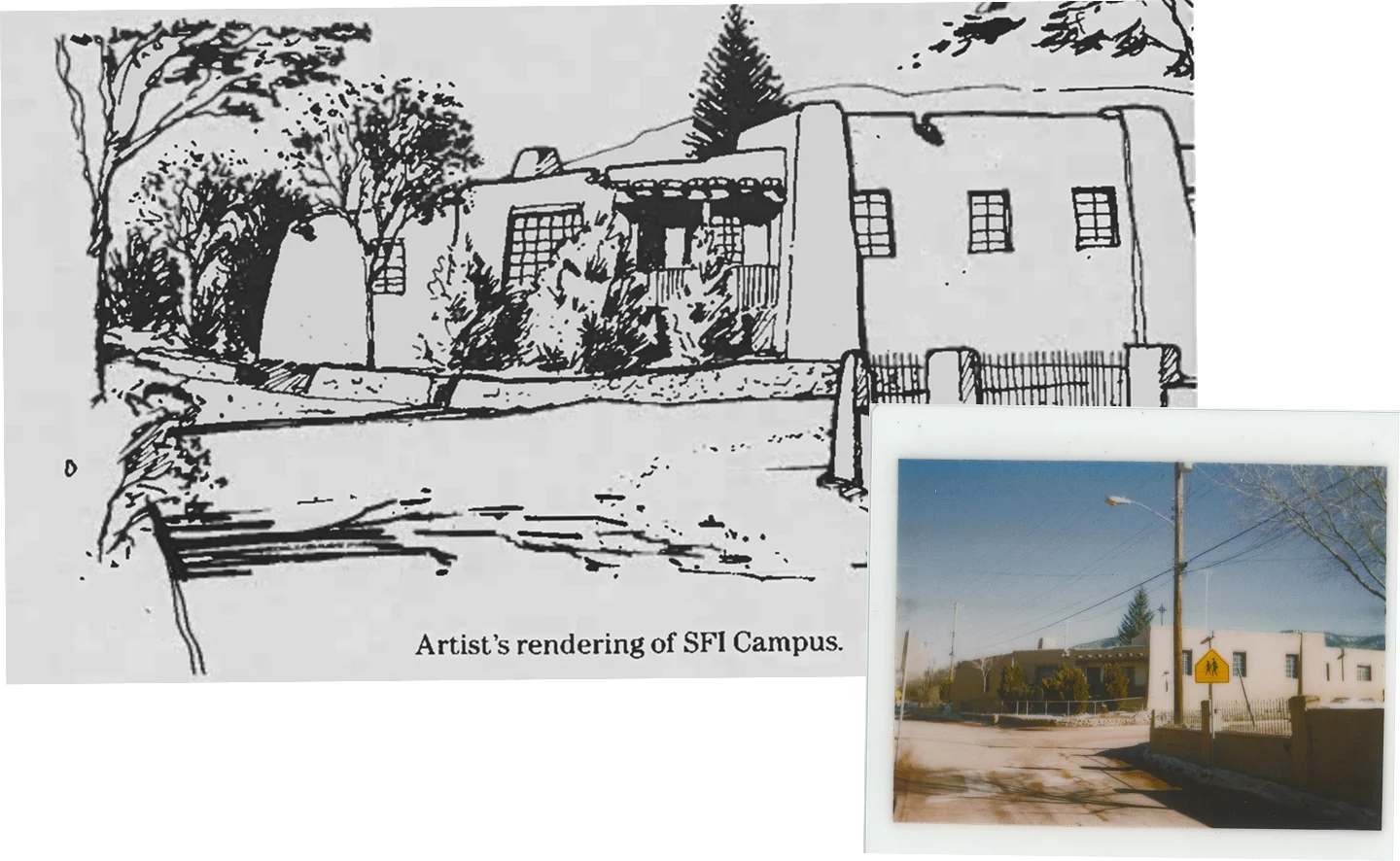
In 1988, the resident researchers set up shop at the old convent. Finally, that uncommon assembly of economists, physicists, and computer scientists has arrived under the stained glass.
The researchers’ goal is to reimagine economics research. One of their most lasting contributions is to transform agent-based modeling from a nascent approach into an innovative tool.
They set up their Sun Microsystems desktop computers, and soon clicking keyboard chatter fills the adobe halls. They spitball ideas in the old chapel — now a seminar room — or on bright white chairs in the sunny courtyard, or in the small conference room off the kitchen.
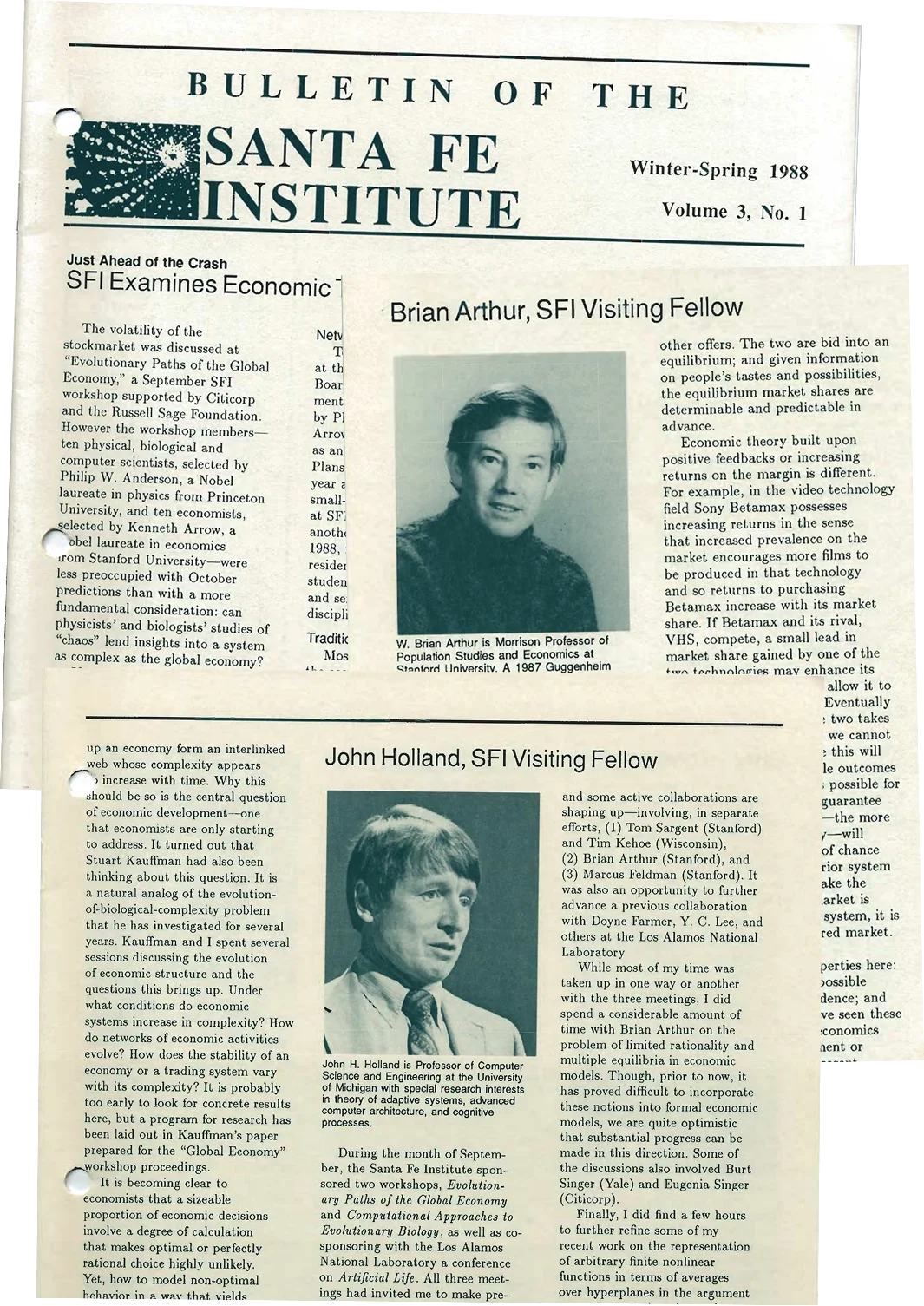
Led by W. Brian Arthur, participants in the SFI Economics Program begin to hammer together ideas about computational economics previously developed at academic centers such as the Free University of Brussels and University of Michigan. In SFI’s environment of free-spirited discussion and lowered disciplinary drawbridges, several new economic ABM projects spring up.
SFI’s first postdoc, John Miller, uses algorithms to evolve computer programs that play the Prisoner’s Dilemma. With John Rust and Richard Palmer, Miller develops another variant on Axelrod’s ABM called the Double Auction Tournament to explore basic market behavior (and, in the process, runs the world’s first internet auction).22 The SimCity game developers stop by SFI, chatting about methods for modeling a city that grows on its own. SFI’s first graduate student in residence, Jasmina Arifovic, spends several months at the Institute, running pioneering economic experiments she replicates using ABMs and other computational techniques.23
Possibility suffuses the air: what long-ignored problems can now be tackled?
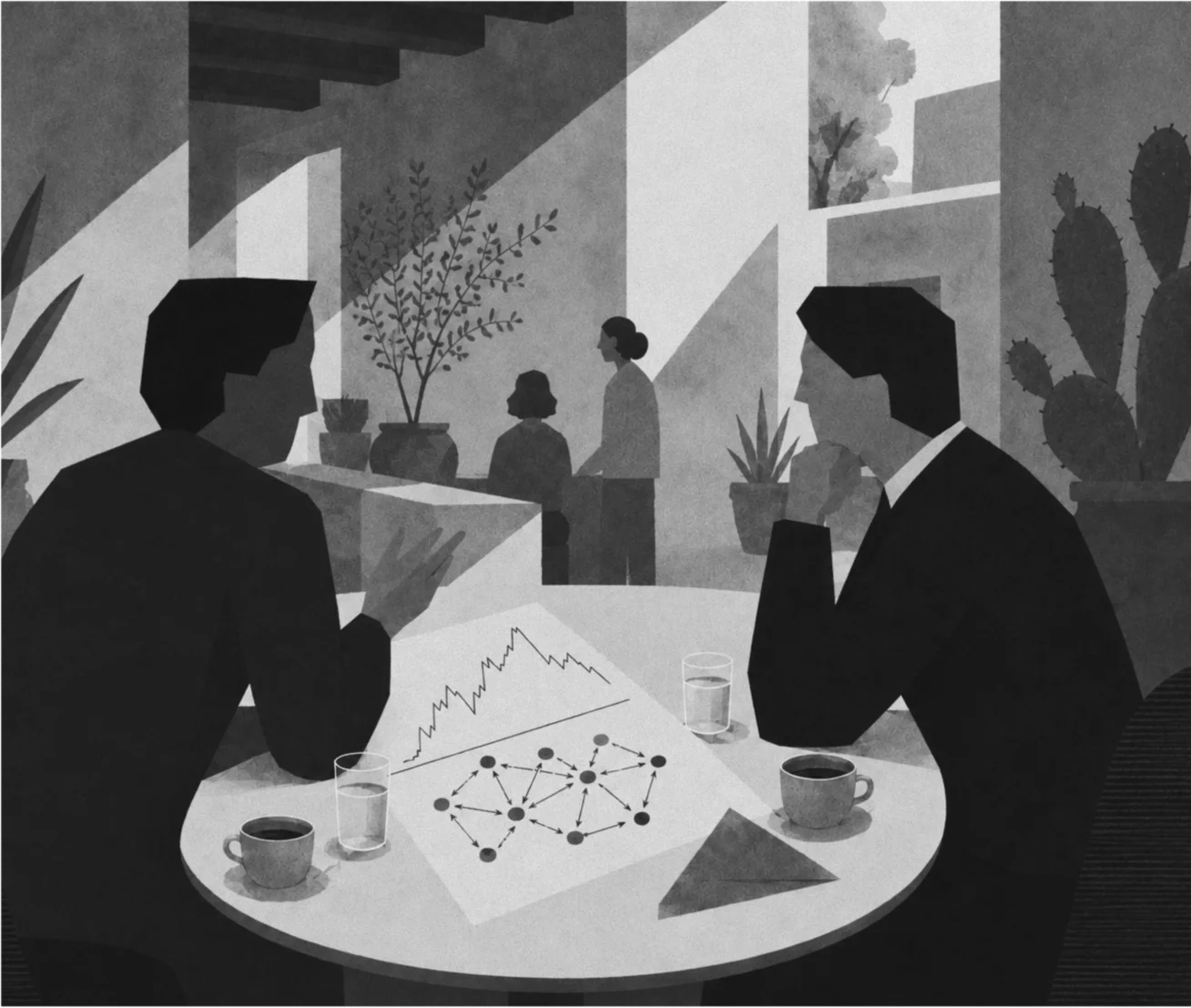 i
Up until this point, economics has had a limited toolkit for modeling how agents differ and evolve. As a result, many economic modelers determine an optimal solution, then create agents to carry out a specific strategy that can achieve that solution.
Arthur and Holland want to probe this assumption. After all, real humans possess the agency to switch between different economic strategies. They struggle to make optimal choices when faced with complexity. And they change their minds.
Teaming up with Blake LeBaron and Richard Palmer, and advised by Stephanie Forrest, Arthur and Holland assemble the Santa Fe Artificial Stock Market. They build their ABM using an early form of machine learning that includes reinforcement learning and evolution (and which later earns Holland a MacArthur Fellowship25).
The SFI Stock Market, as it gets nicknamed, gives trader–agents the power to learn multiple rules, test them out, and pick their favorites. Then, the researchers watch how the market behaves in response.
By 1991, the ABM is pushing out results from the modeled stock market in real time. Arthur, now at Stanford, regularly calls up the team back in Santa Fe to ask: “What’s our market doing today?”
“It is hard to get the SFI Stock Market to not crash. And that means you get pretty realistic markets with bubbles, crashes, and persistent volatility.”
Blake LeBaron
Most standard economic modelers look for regularities. Assuming agents are supercapable and always make rational decisions, they develop mathematical equations to hunt for equilibria: regular patterns in the system that remain stable.
But like many ABMs, the SFI Stock Market models non-equilibrium dynamics — systems that may never reach a steady state, featuring agents that don’t consistently make smart choices, revealing behaviors that may not arise in typical economic models.
In other words: a stock market that crashes.
An ABM can now examine dimensions of the world that traditional economic models have struggled to access. Arthur muses about a future “economy under glass,” where researchers look down omnisciently on little agents scurrying below — predicting our own real-world fates.26


 i
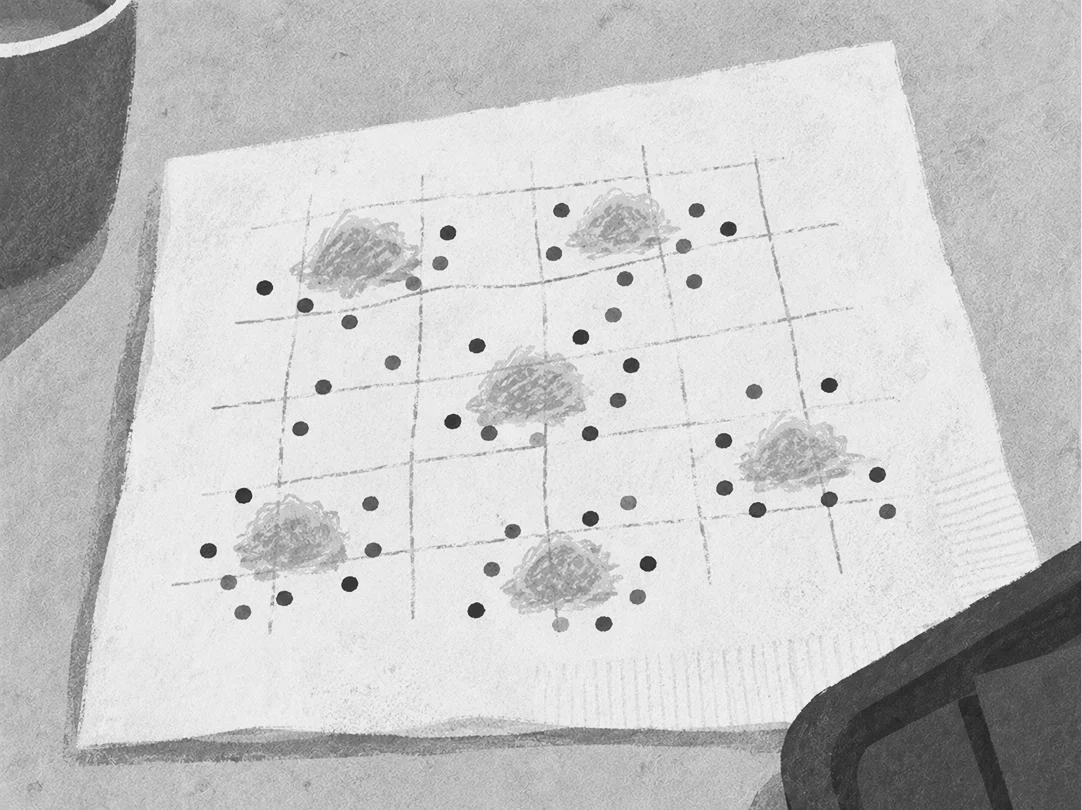
In 1993, they fly out to Santa Fe to demonstrate the prototype of their napkin sketch.
The premise is simultaneously simple and far-reaching. Imagine a group of people gets dropped on a landscape full of resources. How will they interact with this “sugarscape,” and with each other?
It startles a number of economists and social scientists to see that the simplest of rules can lead agents to replicate the interconnected complexities of human social life.34 Sugarscape’s broad scope begins to illuminate the possible “why” behind various core phenomena in human populations: overconsumption, population growth, economic inequality, life, death.
If an ABM can now model social phenomena beyond basic market economics, researchers start to wonder: could ABMs approximate an entire society?
Sugarscape is not the only model pushing ABMs past the usual economic questions in the early 1990s.
Another classic example comes from Brian Arthur.35 During his tenure at SFI, Arthur had loved hearing Irish banjo and fiddle at El Farol Bar on Wednesday nights — except when too many people crammed between the adobe walls.
Based on this experience, in 1994, he publishes an ABM describing how strange phenomena occur when agents try to predict other agents’ crowd-avoiding behaviors.36 (Careful to avoid crowding in real life, Arthur intentionally publishes the wrong weeknight for Irish music!) This El Farol Bar Problem soon gets taken up by game theorists, physicists, and financiers.
 i
 i
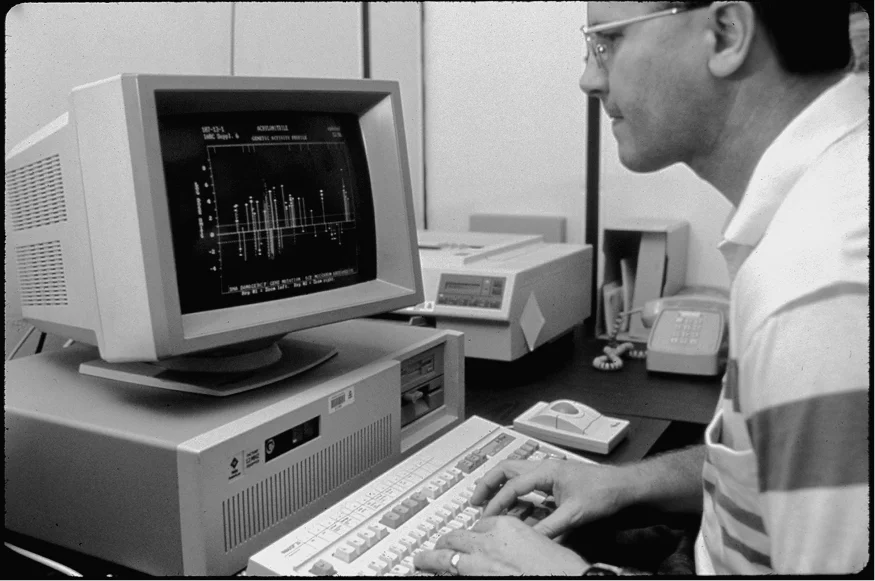
Many issues block the wider adoption of ABMs in the mid-1990s. Some researchers are skeptical that simple agent-based models could actually provide scientific insights about our complex world. “The usual criticism of these models is the weakness of conclusions based on simulation as compared to analytical results of other models,” summarizes mathematician David Hiebeler in 1994.38
There are technical reasons for the gaps. One is that limited data availability and computational power do restrict the scope, accuracy, and precision of the predictions ABMs can make. Another is that without proper testing mechanisms, it’s hard to identify which findings result from the mechanisms being tested and which are artifacts of the model’s parameters. (Around this time, Miller and others start proposing important methods for testing an ABM’s sensitivity to model parameters.39)
There are social barriers to adoption, too. By the mid-1990s, many social scientists still haven’t heard of agent-based modeling. Those who have may be on their fourth desktop computer, but often don’t have a clue how to program an intricate ABM from scratch. A number of dyed-in-the-wool neoclassical economists resist computational modeling, or even the notion of studying non-equilibrium dynamics.
 i
Advocates for computational modeling set out to change those perceptions.
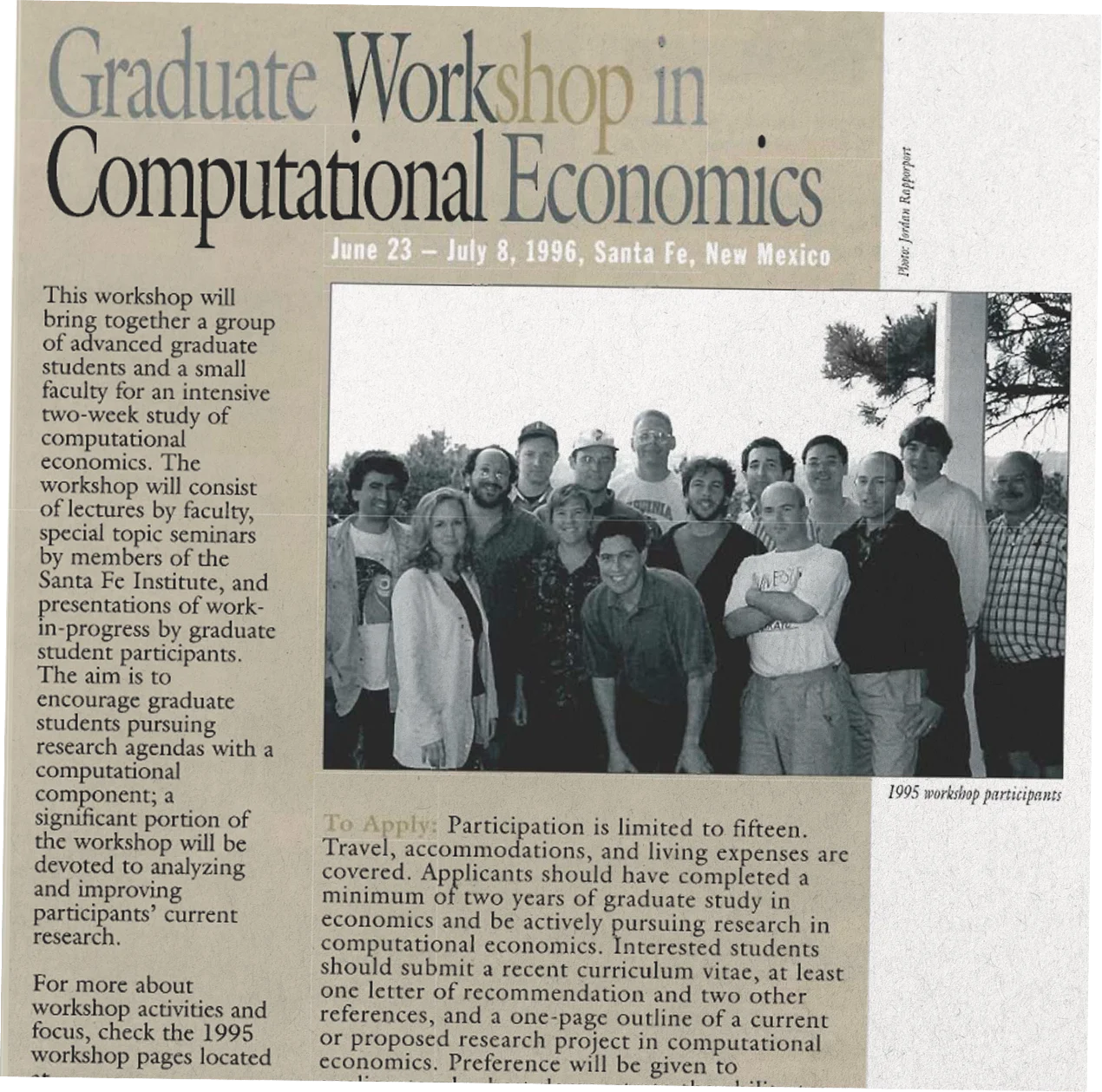
Page and Miller realize there is no robust venue for educating young researchers in ABM techniques. So in 1995, they launch the SFI Graduate Workshop in Computational Social Science, which trains students in agent-based modeling and other computational methods.40
Economist–mathematician Leigh Tesfatsion presents on ABMs at SFI and around the world. Noting a lack of publicly accessible information on agent-based economics, she creates an influential website, mailing list, and handbook.41
To make it easier for researchers to use agent-based modeling techniques, SFI launches the first platform for building ABMs, Swarm, an effort led by computer scientist Christopher Langton.
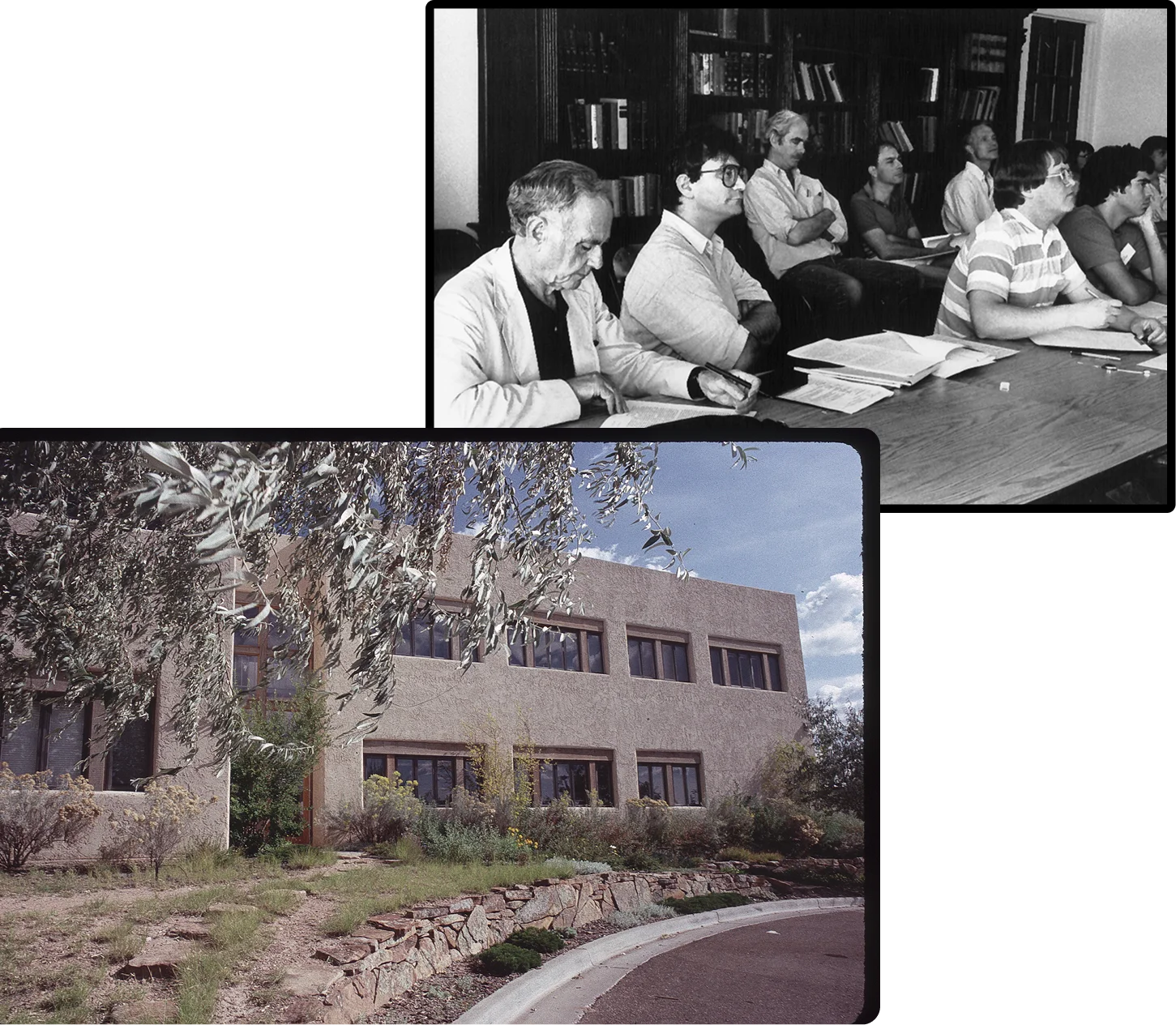
By the late 1990s, social scientists in more fields begin experimenting with ABMs. Around the same time he launches Swarm, Langton presents a project44 with archaeologist Tim Kohler, aimed at using ABMs to understand prehistoric settlements. During a prior sabbatical in SFI’s latest home — a drab office park next to a hospital complex — Kohler had grown excited about Langton’s arguments.
 i
By 1997, even in economics, the mainstream tide may be turning. John Miller and Scott Page are shocked when an editor for The American Economic Review suggests cutting a long justification of computational methods from their accepted paper.45 Everyone understands now, the editor says, that computation is here to stay.
On a hilltop in Santa Fe, past the columned portico and inside SFI’s now-permanent home, Joshua Epstein presents to a motley crew. The outcome will be the Artificial Anasazi ABM47 — a proof of concept that agent-based modeling matters for archaeology.
 i
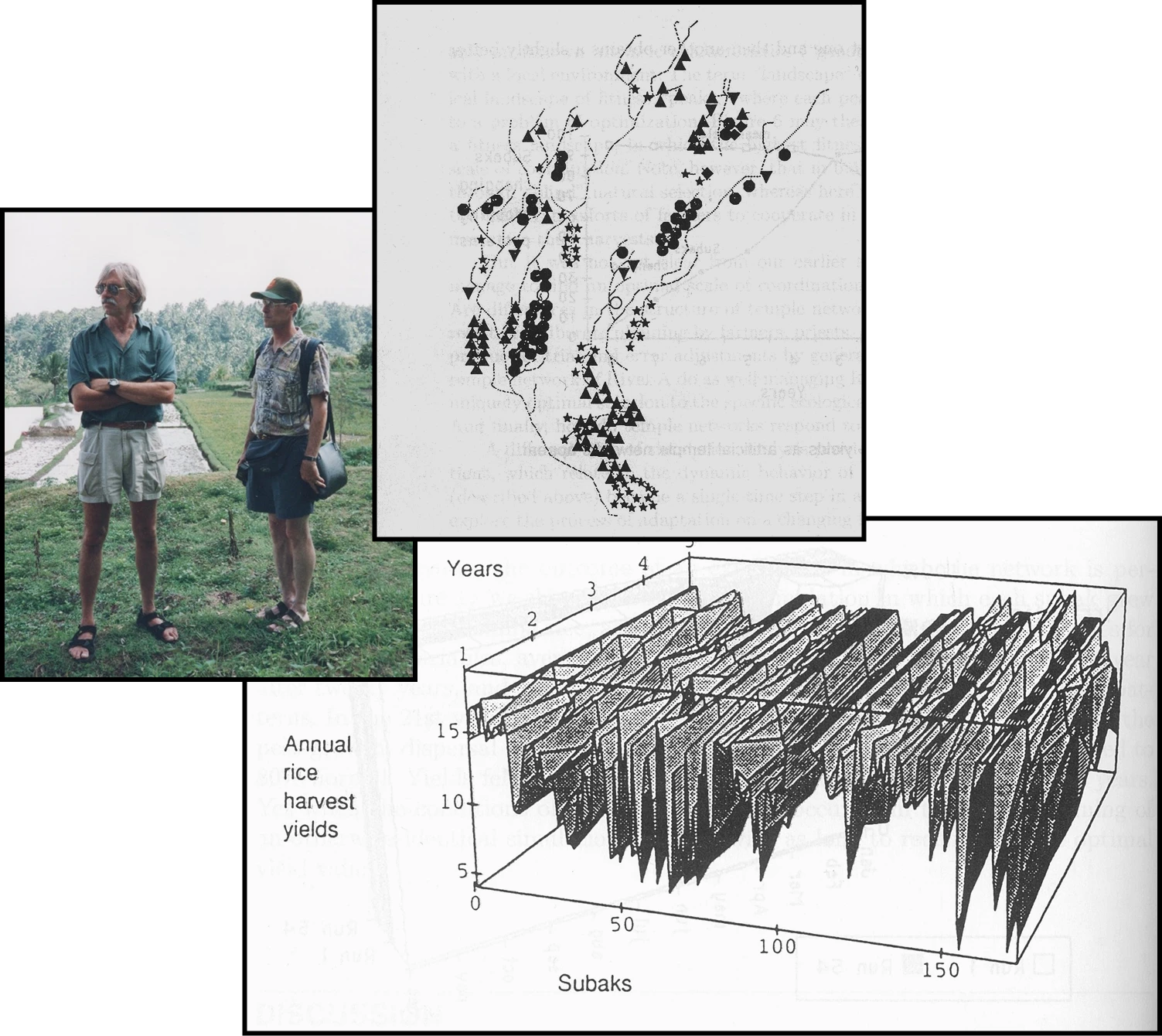
Eager to forge ahead with new technological tools, Kohler, George Gumerman, and other prominent anthropologists and archaeologists (such as Henry Wright and Steve Lansing) form the SFI Culture Group. They discuss modeling ancient wars in southern Mexico, consider irrigation-management models48 in modern-day Bali, and debate how an agent-based approach could shake up assumptions about ancient Egypt, among other topics.
In 2000, under the auspices of an SFI publication series, Kohler and Gumerman publish an edited volume49 that convinces many archaeologists — and soon, funding bodies — to try agent-based modeling. As Wright explains in the book’s final chapter, ABMs inspire hope that social scientists may one day be able to chart general patterns of cultural stability and change.50
The new millennium brings with it a crop of researchers eager to apply ABMs to unexpected kinds of data: epidemiological, environmental, evolutionary.52
More than 50 new ABM papers published, more than 30 citations of any ABM paper53
In areas like public health, ABMs tied to real-world data become so effective that policymakers act directly on their results.
 i
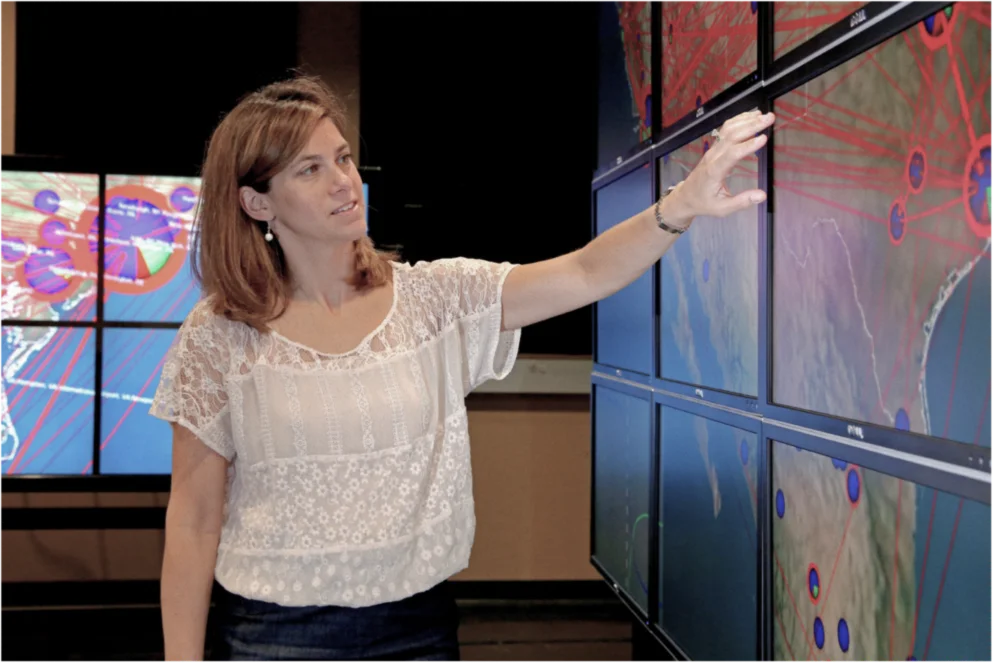
The story of ABMs in public health begins in the wake of 9/11 bio-terrorism concerns and SARS outbreaks. The first infectious-disease ABMs include models by Lauren Ancel Meyers, as well as by Joshua Epstein.54
more than 90 new ABM papers published, more than 600 ABM citations55
Public health researchers start to take advantage of the fact that more readily accessible data, plus computational systems to process it, make ABMs increasingly insightful about the real world.

 i
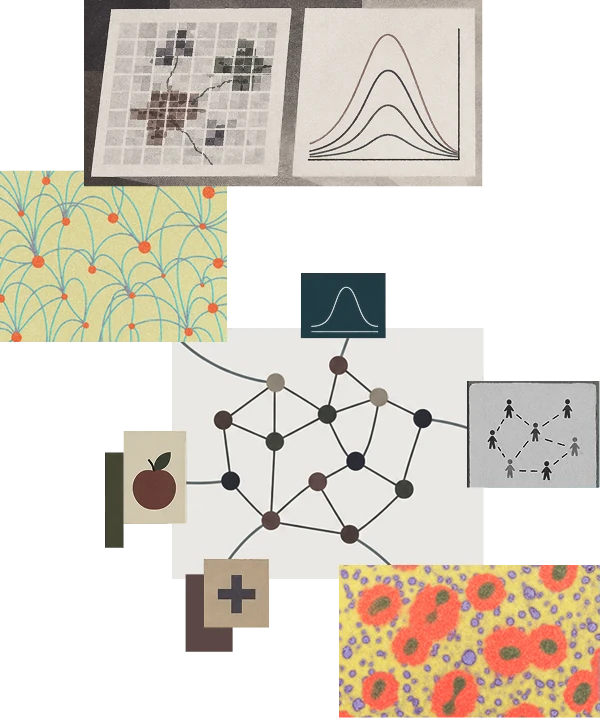
In 2009, the H1N1 virus jumps from pigs to humans. Swine flu morphs into a pandemic. And governments start paying serious attention to agent-based modeling. The U.S. National Institutes of Health turns to its relatively new network of infectious-disease ABMs — led by researchers like Ross Hammond — for help.56 Comparing the results of independent ABMs fed with massive amounts of data leads to more realistic predictions.
Health leaders at the federal, state, and local levels start acting on the ABM network’s forecasts when making decisions.
more than 140 new ABM papers published, more than 1600 ABM citations57
 i
Epidemiologists start thinking more broadly about what ABMs can achieve. Hammond announces the first ABM to tackle a public health issue beyond infectious disease (in this case, obesity).58 Soon, ABM research underpins medical reports used both to craft FDA policy and to shape USDA food recommendations.59
Meanwhile, Joshua Epstein releases the first infectious-disease ABM on a planetary scale.60
Still working in economics, he also publishes Agent_Zero, a formal alternative to the rational actor of economics and game theory.61 But the field that once incubated agent-based modeling is on a very different trajectory from epidemiology.
By the early 2010s, most real-world applications of ABMs are not in economics. Getting enough data about the right variables to make useful economic predictions for policymakers is next to impossible.62
Nearly two decades on, the dream of encapsulating the economy under glass remains unachieved.
THROUGH A NEW LOOKING-GLASS
Despite limited real-world applications of ABMs in economics, new opportunities are brewing. In the aftermath of the 2008 financial crisis, which illuminates the failures and vulnerabilities of traditional economic models, economists find themselves searching for new approaches.
 i
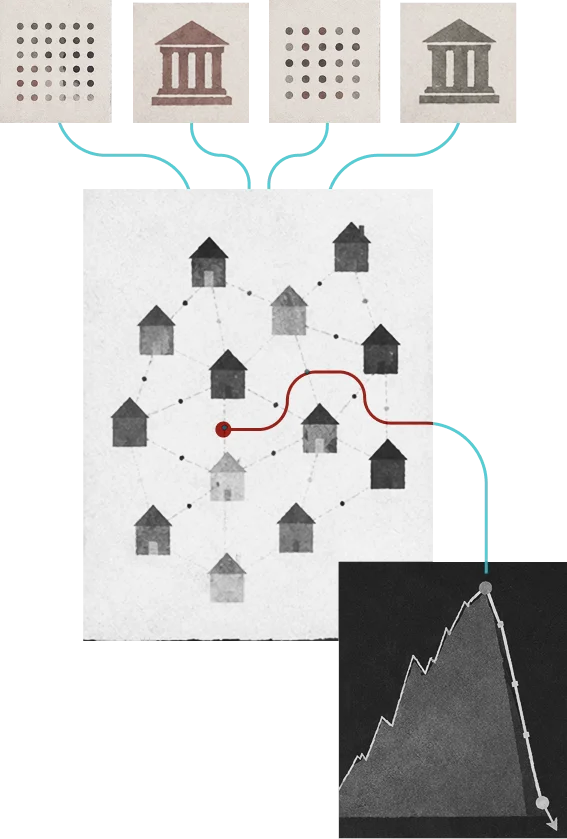
Looking to make agent-based market predictions more realistic, some economists attempt to connect ABMs to the vast stores of data beginning to proliferate across the Internet. Robert Axtell, J. Doyne Farmer, John Geanakoplos, Peter Howitt, and others discover they can scrape county websites around Washington, D.C., for housing data, then combine it with data from the IRS and from private mortgage companies.
They discover that they can bake all that information into an ABM that correctly details the dynamics of the housing market bubble and crash.63
Central banks adapt this new housing market bubble ABM for their own countries. Eventually, England, Canada, the Netherlands, Denmark, Italy, Spain, Hungary, and France, as well as the European Central Bank, will join the list.64
 i
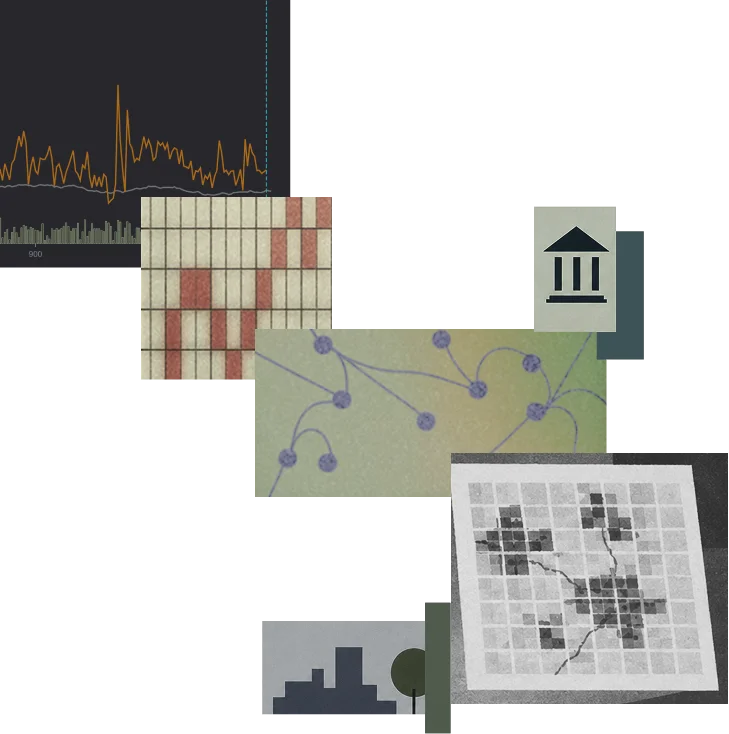
New economic ABMs like the housing market bubble model — existing thanks to 21st-century dataset availability and computational power — extend the legacy of the SFI Stock Market. Equipped with the right data and enough computational capability, ABMs allow economic policymakers to understand boom-and-bust cycles better than traditional models alone do. The U.S. Office of Financial Research and the Bank of England begin broader investigations in how to use agent-based methods for policymaking.
The time has arrived for policy-focused researchers across many fields to embrace ABMs, argues complex-systems sociologist Elizabeth Bruch in an influential paper.65

ABMs start offering empirical insights across many new areas — including the human past.
 i
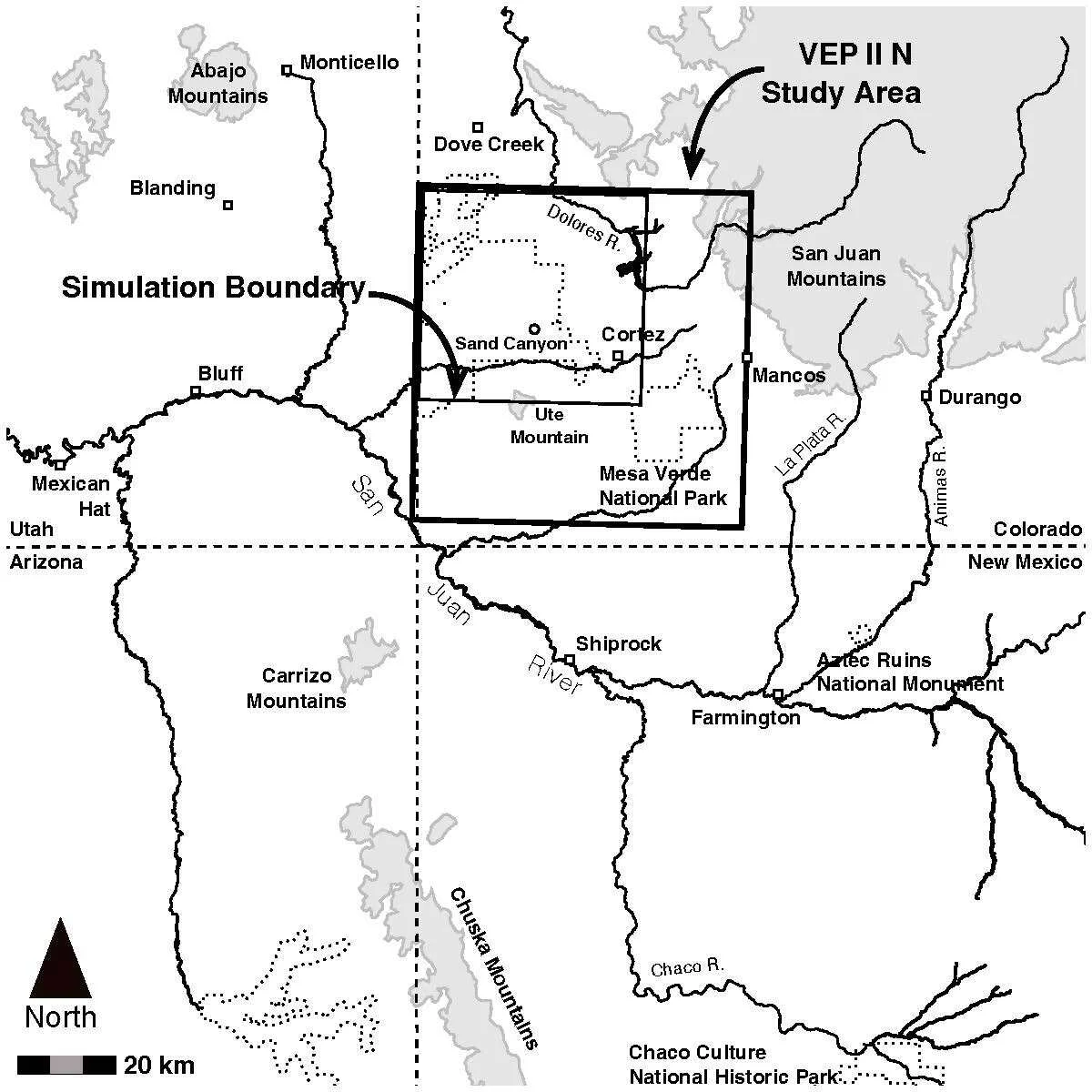
In their Village Ecodynamics Project model, built initially on a grid of cells in Swarm, virtual households of Ancestral Puebloans (agents) try to optimize their access to resources on a landscape. The agents harvest maize and wood, hunt animals, find water sources, construct homes. In later versions, the agents shift in relation to each other by trading, forming allies, and committing acts of warfare.
Stefani Crabtree:
“The things that preserve are objects like pottery. What doesn’t preserve are the conversations that happened between people in the past.
That’s the challenge with archaeology: how do we get from stuff to people? Agent-based modeling provides us a way to test theories about how people would interact: farm, build things, have children.
We can create a digital archaeological record that we compare to the objects in real life. ABMs help us start to get into those invisible interactions.”
So Crabtree builds an ABM full of territorial agents who decide where to construct households and whether to ignore or conquer encroaching groups. Then she opens dusty archaeological tomes, picks up her calipers, and starts to measure old drawings of Ancestral Puebloan kivas, the communities’ underground pit structures.
In 2017, Stefani Crabtree, collaborating with Kohler and others, publishes a model66 built on the Village Ecodynamics Project platform that demonstrates how ABMs can address even the most perplexing problems in archaeology.
Her ABM sheds light on a contentious, decades-long debate: were Ancestral Puebloans egalitarian or hierarchical? Descendant communities of Ancestral Puebloans, like the Hopi, Zuni, and San Ildefonso, carefully structure their societies to avoid marked status differences. But archaeologists excavating 12th-century Ancestral Puebloan burials in Chaco Canyon had found turquoise, copper bells, traces of chocolate — all signs of high-status individuals, pointing to a hierarchy.
Ultimately, Crabtree’s research suggests that Ancestral Puebloans in the Four Corners region lived in small, egalitarian communities, then later formed large, competitive, hierarchical polities. After changes in the climate, the polities broke up, and egalitarianism returned.
Combining an ABM with data about the past offers a new perspective on a major mystery.67
 i
Suddenly 2020 hits.
No model is ready to tackle COVID-19 and the arrival of the worst global pandemic to occur since the HIV/AIDS outbreak. Finding and collecting crucial data is a major challenge in the unfolding chaos. But researchers scramble to try.68


 i
Sequestered at his forested hillside home outside Oxford, Doyne Farmer ponders a shellshocked planet.
Epidemiology, economics, and a precise understanding of the past converge on a tool capable of handling the data.69
First, Farmer and his collaborators, including Penny Mealy and R. Maria del Rio-Chanona, ask analysts to rate how important each industry is to the functioning of every other industry. This dataset gets rolled into a prediction of how the U.K. economy will perform after COVID-19 lockdowns begin.
Traditional models — the Bank of England’s is only one example among many — end up much farther off. One reason is because most such models assume the economy is in equilibrium, an assumption the pandemic shatters. Also, many traditional models struggle to capture dynamic features, like how people and companies rapidly adjust their behavior over time.
The U.K. government implements some of the recommendations from the ABM (for instance, to close customer-facing industries but keep upstream industries open) as it charts a national emergence from lockdown.
By linking new datasets with intuitions about the way pandemics affect people’s behavior, the ABM is able to simulate an economic contraction that comes very close to what actually happened between April and June 2020.
UK value added (similar to GDP) April–June 2020, compared to October–December 2019:
Real life: −21.5%
ABM forecast: −22.1%
Bank of England forecast: ~−30%

 i
More than 900 new ABM papers published in 2025, and more than 24,000 citations of any ABM paper71
A 2025 retrospective paper by Doyne Farmer and Rob Axtell detailed where ABM has gone and where it is going.72
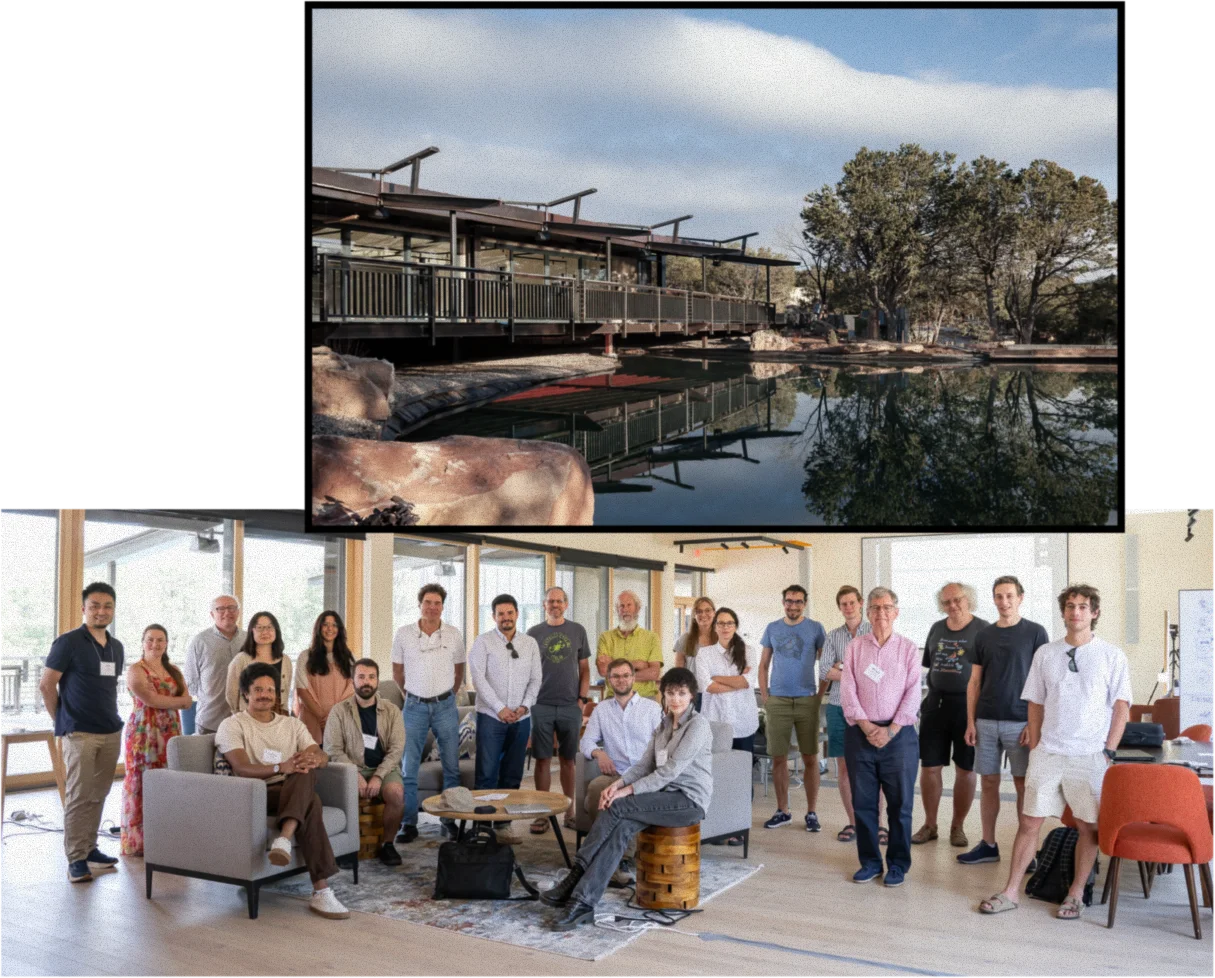
And a monthlong working group met at SFI’s newest outpost, the Gurley Forum. Conversations that started many years ago in the former convent were revitalized. Participants held intense discussions about machine-learning-enhanced agents and central bank ABMs in the Forum, continuing those conversations during occasional hikes and dinners.
The researchers worked on technical systems to connect real-world data to ABMs that might someday serve as policy labs. They advanced testing to make ABMs more accurate and to increase confidence in the results. And they discussed benchmarks for how ABMs perform successfully compared to real-world data of many scales in areas like finance, monetary policy, and innovation.

Supported by the Zegar Family Foundation and the Omidyar Network
Credits
Story by Julia Ostmann
Interactive web design by Nick Pelton
Art coordination and graphic design by Edson de la O Barquero
Edited by Katie Mast
Cover illustration by Ibrahim Rayintakath
Research assistance by Ann Whipple
Special thanks for their contributions to developing the model widgets: Blake LeBaron (SFI Stock Market), Joshua Epstein (Sugarscape), Stefani Crabtree (How to Make a Polity), Anton Pichler (Forecasting the economics of the COVID-19 pandemic)
Telling this history would not have been possible without invaluable input from many scholars, including Brian Arthur, Bob Axelrod, Elizabeth Bruch, Stefani Crabtree, Joshua Epstein, Doyne Farmer, Stephanie Forrest, John Geanakoplos, Ross Hammond, Tim Kohler, David Krakauer, Steve Lansing, Blake LeBaron, Lauren Ancel Meyers, John Miller, Anton Pichler, Valentina Semenova, and Leigh Tesfatsion. Our gratitude for their stories and insights.